

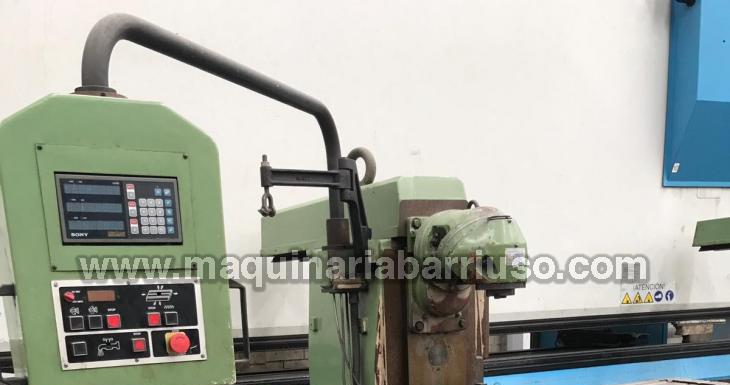
Milling machines are one of the most important machines in modern machining. Their ability to work materials with precision, reproduce complex geometries and maintain tight tolerances makes them a key resource for numerous industrial sectors. From the manufacture of metal components to work on wood or technical plastics, the milling machine makes it possible to transform a raw workpiece into a component ready for assembly or sale.
At Maquinaria Barriuso, specialists in new and used industrial machinery, we see every day how choosing the right milling machine improves productivity and the quality of the final product. For this reason, in this content we clearly explain what a milling machine is, what it is used for, what parts it has, what types exist and what you should take into account before choosing yours.
What is a milling machine
A milling machine is a machine tool designed to machine materials using a rotating cutting tool called a mill. During the process, material is removed from the workpiece through controlled movements until the desired shape is obtained. This machining can be flat, in grooves, cavities or with very detailed contours, depending on the type of mill and the work program.
The operating principle is based on two basic elements: the mill rotates at the appropriate speed and the workpiece moves on a table that allows movements along several axes. By combining these movements, it is possible to machine surfaces and shapes that are very varied, both in simple and complex parts.
Thanks to this way of working, the milling machine has become an essential tool in mechanical workshops, mold manufacturing companies, toolmaking shops, industrial carpentry and many other activities.
What a milling machine is used for in today’s industry
Milling machines stand out for their versatility. With a single machine it is possible to carry out multiple machining operations, simplifying processes and reducing setup times. Some of their most common uses are the following:
- Create flat surfaces: one of the most frequent tasks. Milling machines allow creating flat and parallel faces with great precision, which is essential in parts that will later be assembled with other components.
- Make slots and channels: very useful for housing shafts, keys, guides or fastening elements. This type of machining is common in all kinds of mechanical components.
- Achieve special profiles: by using specific mills, curved contours, bevels and custom shapes can be obtained, offering many possibilities for part design.
- Rectify and adjust parts: before the final assembly of a machine, many parts go through the milling machine to achieve the exact measurement and ensure proper fitting.
- Work different materials: a milling machine can machine metals, wood, technical plastics, aluminum and other materials, provided the right tools and parameters are used.
In summary, a milling machine is used to shape, size and finish parts with a level of precision that cannot be achieved manually, while maintaining consistent repeatability from one part to another.
Main parts of a milling machine
Knowing the structure of the milling machine helps to better understand its operation and to keep it in good condition. Below are the most important elements:
- Worktable: surface where the workpiece to be machined is fixed. It can move along one or several axes depending on the model of the milling machine.
- Head: support where the spindle is located. In some cases it can be tilted or height-adjusted to adapt the machining.
- Spindle: shaft that rotates the mill. Its rigidity, speed and quality have a direct influence on the finish of the workpiece.
- Motor: provides the power needed to rotate the spindle and, in some models, to power the automatic feeds.
- Feed systems: these can be manual cranks or motorized systems. They allow the table or head to move along the different axes.
- Gearbox or variator: responsible for adjusting the cutting speed according to the material and type of milling tool.
- Guides and supports: components that guide the movements of the table and ensure smooth and controlled displacement.
Proper maintenance of these parts, along with correct lubrication and cleaning, extends the service life of the milling machine and maintains machining quality.
Most common types of milling machines
Not all milling machines are the same. Depending on the spindle arrangement, size and intended use, we can find different types. The most common in the industry are the following:
Universal milling machine
It is a very versatile machine, as it allows the spindle to be oriented both horizontally and vertically. It is used when varied work must be performed on the same machine, although its cost is usually higher than that of more specific models.
Horizontal milling machine
In this type of milling machine, the spindle is positioned parallel to the table and the mill rotates in a horizontal plane. It is very suitable for deep slots, cuts in long parts and machining operations requiring great stability.
Vertical milling machine
In the vertical milling machine, the spindle is positioned perpendicular to the table. It is one of the most common models in workshops due to its ease of use and its ability to carry out different machining operations.
Within vertical milling machines, two configurations are usually distinguished:
- Bed-type milling machine: offers a very rigid structure, designed for precise and repetitive work. It is ideal when stability and good quality are required in each machining operation.
- Turret milling machine: stands out for its flexibility. It easily adapts to different tasks and is widely used in workshops where varied parts and frequent task changes are common.
The choice of one type or another depends on the type of work, the material, the size of the parts and the expected production volume.
How to choose the right industrial milling machine
When deciding which milling machine to buy, it is advisable to analyze several technical and production aspects. These are some guidelines that help make a more accurate decision:
- Main work material: machining aluminum is not the same as machining hardened steels. The power, type of tool and required speeds vary depending on the material.
- Size of the parts: the table and the travel of the axes must be sufficient to work with the usual dimensions of your projects.
- Type of production: if only a few different parts are to be made, a very stable machine may be preferable. If varied work is carried out, a more flexible milling machine is advisable.
- Available space in the workshop: milling machines take up considerable space. It is important to check the dimensions and access points before making a decision.
- Budget: a new milling machine offers current technology and longer service life, while a refurbished used milling machine can be a good solution when seeking to optimize the initial investment.
At Maquinaria Barriuso we analyze each case individually to recommend the milling machine that best fits the productive needs of each company, both in new machines and in used machinery.
Industrial milling machines at Maquinaria Barriuso
In our catalog we have a wide selection of industrial milling machines for different sectors. Among them you will find:
- New milling machines: aimed at companies looking for modern equipment, with good control systems, great reliability and the ability to work at full capacity for long periods.
- Used milling machines: machines inspected by our technicians, where key elements such as spindles, guides, motors and electrical systems are checked. They are an interesting option for workshops looking to expand their machinery fleet with a controlled investment.
In addition to supplying the machine, we offer advice for choosing the model and support throughout the purchasing process, ensuring that the milling machine truly fits your daily activity.
If you want more information or wish to consider options, you can contact us through the contact section of our website.
Frequently asked questions about what a milling machine is
What is a milling machine in machining?
It is a machine tool that uses a rotating mill to remove material from a part and give it the desired shape. It allows creating flat surfaces, slots, cavities and various contours.
What materials can be machined with a milling machine?
Metals, wood, technical plastics, aluminum and other materials can be machined. It is only necessary to choose the right tool and adjust the cutting conditions for each case.
What is the difference between a horizontal and a vertical milling machine?
In the horizontal milling machine, the spindle is arranged parallel to the table, whereas in the vertical one it is positioned perpendicular. The horizontal type is widely used for grooves and intensive work; the vertical one is more common in workshops due to its ease of use.
What maintenance does a milling machine require?
It requires periodic cleaning, lubrication of guides and moving parts, inspection of the spindle, checking oil levels and verifying the condition of electrical and safety systems.
Is it a good idea to buy a used milling machine?
It can be a very interesting option if purchased from a supplier who inspects and guarantees the condition of the machine. At Maquinaria Barriuso we check each milling machine before sale to ensure it can work properly from day one.