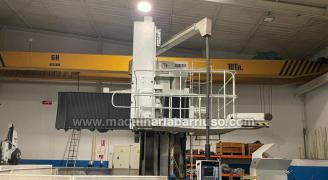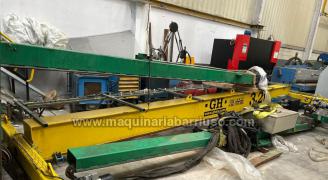
Welding positioners are essential equipment in the industry, designed to facilitate the positioning and rotation of parts during the welding process. From welding metal structures to assembling large industrial components, positioners optimize efficiency and quality in workshops. 

What is a welding positioner? 

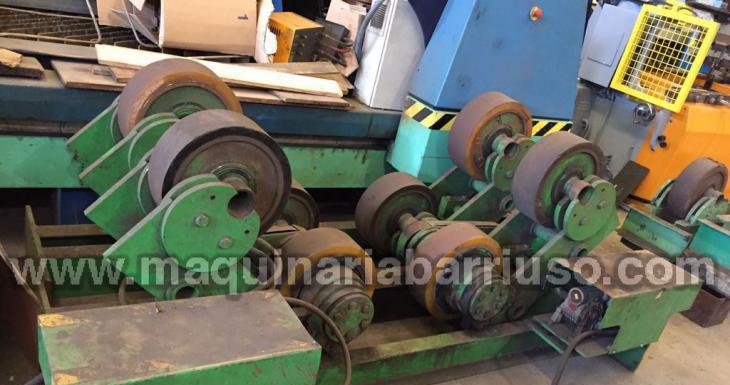
A welding positioner, also known as a rotator in some contexts, is a mechanical device used to rotate and position workpieces such as tanks, pipes, engines, or coils. Its primary function is to ensure uniform access to all areas of the piece, improving welding quality and making the operator's work easier. 

What does positioner mean? 

The term "positioner" refers to a tool or device designed to rotate objects. In an industrial context, it is used to describe specific equipment that helps handle heavy pieces during processes such as welding. 

Types of welding positioners 

There are different types of welding positioners, each tailored to specific needs: 

  1. Pipe positioners: Designed for working with pipes, allowing them to be rotated during welding. 
  2. Tank positioners: Ideal for large cylindrical structures such as tanks and pressure vessels. 
  3. Coil positioners: Used in processes requiring the rotation of metal or plastic material coils. 
  4. Engine and turbine positioners: Assist in assembling and welding engine and turbine components, improving precision in complex tasks. 

How do welding positioners work? 

The operation of a welding positioner is based on motorized roller systems and adjustable controls: 

  1. Rotation system: The rollers rotate the piece at controlled speeds, allowing the operator to weld evenly. 
  2. Piece positioning: Some models include adjustable tilting to access difficult angles. 
  3. Remote control: Remote controls allow welders to operate the equipment from a safe position. 

Applications of welding positioners 

Welding positioners have key applications in multiple industries: 

  1. Tank and pipe manufacturing: Uniform rotation for precise welds in cylindrical containers. 
  2. Automotive industry: Welding of heavy components such as engines and bodies. 
  3. Shipbuilding: Assembly of large ship sections. 
  4. Heavy equipment manufacturing: Handling bulky parts in industrial machinery. 

Benefits of using welding positioners 

  1. Improved efficiency: They speed up the process by eliminating the need to manually rotate pieces. 
  2. Increased safety: They reduce the risk of injury by minimizing manual handling. 
  3. Consistent quality: They ensure uniform heat distribution, preventing welding distortions. 

Why choose a second-hand welding positioner? 

Second-hand welding positioners are an economical and efficient alternative: 

  • Reduced cost: You can save significantly compared to new equipment. 
  • Immediate availability: Ideal for urgent projects or tight budgets. 
  • Proven quality: Many used pieces of equipment offer reliable performance after being refurbished. 

Considerations when choosing a welding positioner 

Before purchasing a positioner, whether new or used, consider: 

  1. Load capacity: Make sure it can handle the weight and dimensions of your pieces. 
  2. Control options: Look for equipment with adjustable speeds and intuitive remote controls. 
  3. Durability: Choose sturdy materials to ensure long-term use. 

Conclusion 

Welding positioners are essential tools in any industry that requires handling heavy pieces during the welding process. Whether you're working with tanks, pipes, or engines, the right positioner can significantly improve the quality and efficiency of your work. 

At Maquinaria Barriuso, we offer a wide selection of new welding positioners and second-hand positioners. Contact us today to find the perfect solution for your needs.