If you work with metal and need to make precise bends, sheet metal press brakes are essential tools. In this article, we explain what they are, how they work, what types exist, and how to choose the most suitable one for your needs, whether it's a hydraulic, manual or CNC press brake.
What is a sheet metal press brake?
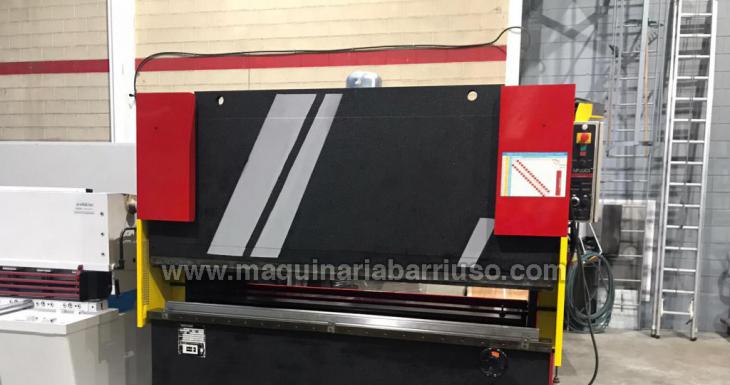
A sheet metal press brake, also known as a bending machine or sheet metal bender, is an industrial machine used to shape metal sheets by applying controlled force. This process is carried out by a punch pressing the sheet against a die, achieving bends with precise angles.
This type of equipment is essential in manufacturing processes, metal structures, bodywork, industrial furniture, and much more.
How does a press brake work?
- Positioning: The sheet is placed on the machine's lower die.
- Bending: The punch descends with force and precision, bending the sheet to the desired angle.
- Parameter control: In CNC press brakes, the process is automated and variables such as force, speed, and bend length can be precisely adjusted.
This process is known as sheet metal bending and is key in many industries.
Types of sheet metal press brakes
Understanding the different types of metal bending machines will help you choose the right one based on the job type and production volume:
Manual press brake
Used for small or artisan tasks, such as tinsmithing. Economical, accurate for simple tasks, and energy-efficient.
Mechanical press brake
Operates with a flywheel. Reliable and ideal for small to medium productions with good repeatability.
Hydraulic press brake
Uses hydraulic cylinders. Noted for its strength, precision, and versatility. Commonly used in large-scale metal industries.
CNC press brake
The most modern type. Computer-controlled, allowing for automation and memory of bending processes. Essential for high-precision series production.
What to consider when choosing a press brake?
- Type and thickness of the sheet material
- Frequency of use
- Available budget
- Required precision tolerances
- Workshop space availability
An industrial sheet metal press brake is not the same as a manual sheet metal press brake, and choosing correctly directly impacts productivity.
Advantages of using sheet metal press brakes
- High precision in sheet bending
- Increased productivity
- Versatility for different types and thicknesses of sheet metal
- Reduction of human error
- Automation in CNC models
Moreover, many modern press brakes allow for high-precision sheet bending with minimal tolerances.
Why buy a second-hand press brake?
Buying a used sheet metal press brake can be a great investment if done properly:
- More affordable pricing
- Reviewed and guaranteed equipment
- Immediate availability
- Lower depreciation
This applies to manual, hydraulic, and CNC press brakes. Many companies offer certified and inspected second-hand press brakes, ensuring good performance.
Frequently Asked Questions (FAQ)
What is a sheet metal bender?
It’s another common name for a press brake. Both serve the same function: bending metal sheets.
What’s the difference between a manual and a hydraulic press brake?
Manual press brakes require physical effort and are ideal for small tasks. Hydraulic ones use hydraulic force and are better suited for industrial jobs.
Where can I find new or used sheet metal press brakes?
At industrial machinery dealers like Maquinaria Barriuso, you can find new press brakes and used ones, with technical support and warranty.
Sheet metal press brakes are essential tools for anyone working with metal. Whether you need a CNC press brake, a hydraulic press brake, or you're considering second-hand options, understanding how they work and what types exist is crucial to making the right decision.
If you need advice on selecting your press brake, contact us. We'll help you find the most efficient option based on your production needs.