

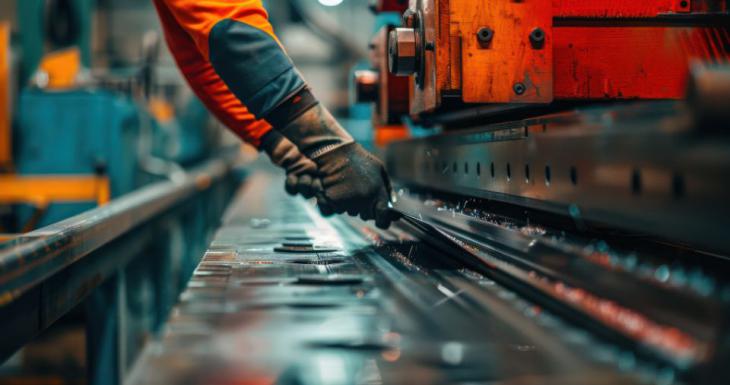
Imagine that you need to bend a metal sheet with precision. You have two options: a hydraulic press brake and a mechanical press brake. Both perform the same task but in different ways.
Now, which is the best option for your workshop? Choosing the right machine can make a difference in terms of efficiency, costs, and quality. In this article, we will analyze their features, advantages, and disadvantages to help you make the best decision.
What is a press brake, and what is it used for?
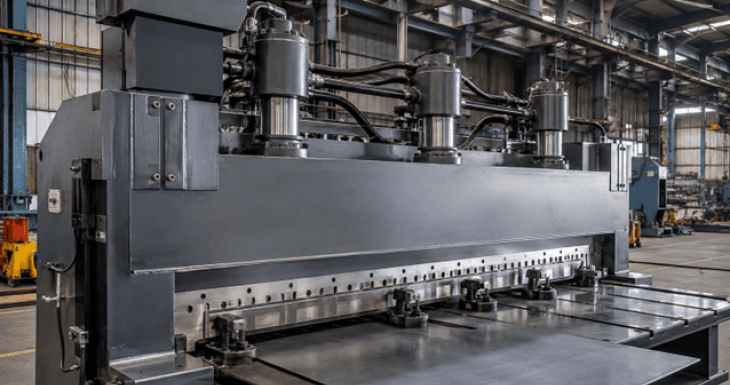
Press brakes are machines designed to bend metal sheets with precision. They are used in multiple industries such as construction, automotive, aerospace, and metal furniture manufacturing.
The operation is simple: a die and a punch apply pressure on the sheet until it takes the desired shape. However, the key difference lies in the drive mechanism, and this is where hydraulic and mechanical press brakes come into play.
Hydraulic Press Brakes: How Do They Work and What Are Their Advantages?
Hydraulic press brakes use oil-filled cylinders to generate the force needed to bend metal. This system allows for greater precision and control over the applied pressure.
Advantages of Hydraulic Press Brakes
- Higher bending force: They can bend thicker and harder sheets without issues.
- Adjustable precision: The pressure can be easily regulated, allowing for precise control of the bend.
- Safety: They incorporate protection systems to prevent accidents.
- Variable bending capacity: They can be adjusted to work with different thicknesses and materials.
- Less mechanical maintenance: They do not rely on a clutch or flywheel system.
Disadvantages of Hydraulic Press Brakes
- Higher initial cost: They are more expensive than mechanical ones.
- Lower speed: Compared to mechanical press brakes, they can be slower in short production cycles.
- Hydraulic system maintenance: They require periodic checks of oil and seals.
Mechanical Press Brakes: How Do They Work and What Do They Offer?
Mechanical press brakes operate using a flywheel and clutch, which apply force consistently and rapidly to the sheet. They are ideal for repetitive tasks in high-volume production.
Advantages of Mechanical Press Brakes
- Higher speed: Their mechanical system allows for faster work cycles.
- Lower initial cost: They are more affordable than hydraulic press brakes.
- Efficiency in mass production: Perfect for series of identical and standard-sized parts.
Disadvantages of Mechanical Press Brakes
- Less flexibility: They do not allow for pressure adjustments with the same precision as hydraulic ones.
- Thickness limitations: They cannot work with very thick sheets.
- Higher wear and tear of parts: The clutch and flywheel require frequent maintenance.
Which Is the Best Option for Your Workshop?
The choice between a hydraulic or mechanical press brake depends on your production needs.
- If you work with thicker sheets and need precision and versatility, a hydraulic press brake is the best option. It is ideal for workshops with diverse manufacturing needs, where pressure adjustment for different materials is required.
- If you are looking for speed and work with repetitive parts in large quantities, a mechanical press brake is ideal. Its speed makes it perfect for production lines with standard formats.
- If you have a tight budget, mechanical press brakes are more affordable to acquire, but hydraulic ones compensate in the long run with lower maintenance and greater durability.
Both types of press brakes have their place in the industry. The key is to analyze your type of work, production volume, and available budget.
Do You Need Advice on Choosing the Best Press Brake?
At Maquinaria Barriuso, we offer a wide selection of hydraulic and mechanical press brakes, new and used, tailored to all types of industrial needs.
If you need more information or personalized advice, contact us, and we will help you find the ideal machine for your workshop.